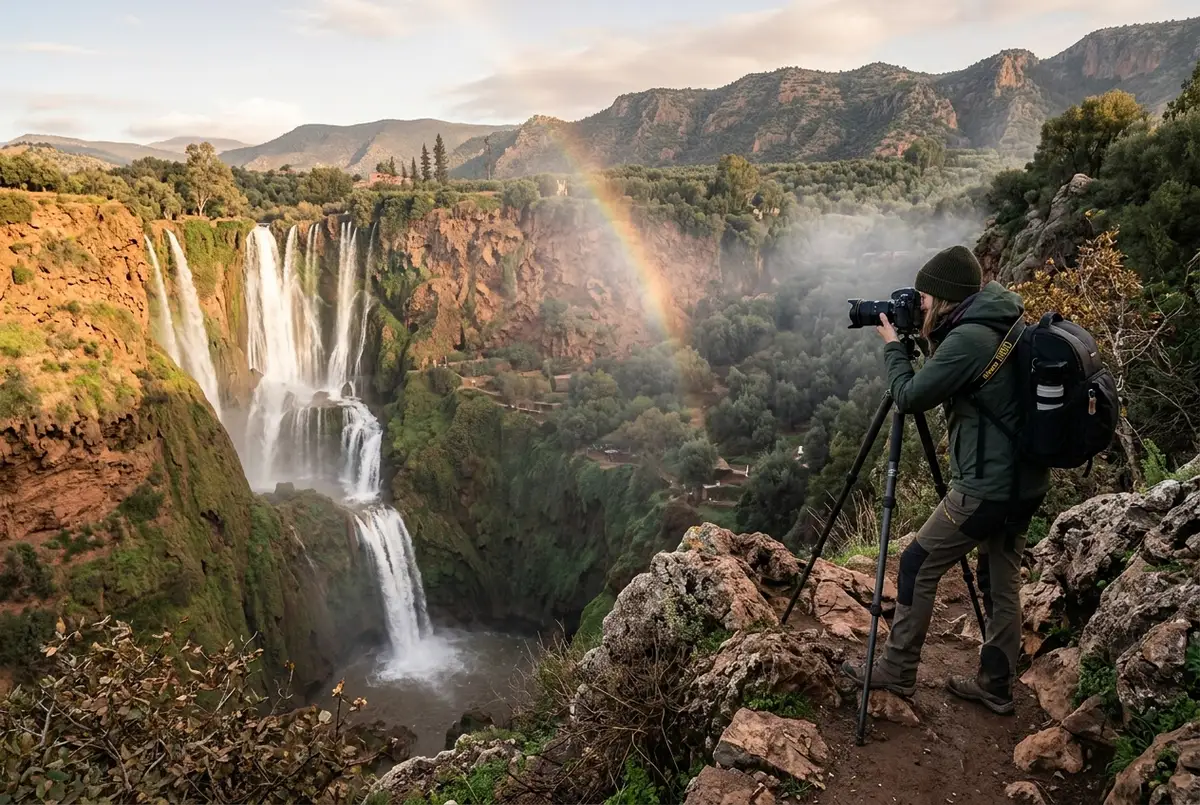
Ouzoud waterfalls photos look completely different depending on where you shoot from, and I do not think most first time visitors realize that going in. Here is what I would actually plan for: the clifftop viewpoint gives you the classic wide shot of the full drop, while getting down onto the water by boat puts you close enough to catch the spray and the near-permanent rainbow on sunny mornings. Budget time for both rather than picking one.
Where Is the Best Clifftop Viewpoint?
The main clifftop viewpoints along the trail down give you the widest angle on the full 110 meter drop, with the tiered rock face and the olive groves framing the shot on either side. I would treat this as your first stop, not your last, since it is the easiest vantage point to reach and gives you the classic reference shot before you head down toward the water.
What Does the Boat Level Shot Look Like?
Getting onto the traditional wooden boat near the base of the falls puts you close enough to feel the spray, and the resulting photos have a very different character: less wide landscape, more immersive close up drama. I would rank this as the single best photo opportunity at Ouzoud if you can only choose one, since it captures a sense of scale that the clifftop shot cannot. My boat ride guide covers what that experience involves and what it costs.
When Does the Rainbow Appear in the Mist?
On sunny mornings, the spray thrown off by the falls regularly catches the light and produces a rainbow effect low in the gorge, most reliably in the couple of hours after sunrise when the sun angle lines up with the mist. I would push for one of the earlier tour departures specifically if this shot matters to you, since by midday the light angle and the crowds both work against a clean photo.
Is Morning or Afternoon Light Better?
Morning, in my opinion, without much competition. The lower sun angle lights the falls more directly and produces the rainbow effect described above, while afternoon light tends to be flatter and harsher by the time most day tours are heading back. I would treat an early pickup as a photography decision as much as a practical one if getting a strong shot is a priority for your visit.

Does the Season Change the Best Photo Opportunities?
Yes, and I would plan around this if photography matters to you. Spring gives you the most dramatic water volume and the fullest rainbows in the mist, while a calmer late summer flow gives cleaner, more defined shots of the tiered rock face without as much obscuring spray. My best time to visit guide covers what to expect month by month if you are timing a trip around photography specifically.
Can You Photograph the Barbary Macaques?
Yes, and honestly I would rank the monkey encounters among the more memorable photo opportunities on the trail, right alongside the falls themselves. I would keep a respectful distance and never use food to lure them closer for a shot, since that is both risky and, in my view, unfair to the animals. My Barbary monkeys guide covers where sightings are most likely along the descent.
What Should You Bring for Better Photos?
A lens cloth is the one thing I would not skip, since the spray zone near the base of the falls will fog or spot a camera lens faster than you expect. Beyond that, a simple protective bag or cover for your camera on the boat ride, and a wide angle lens if you are shooting with interchangeable optics, since the clifftop viewpoints reward a wider field of view more than a telephoto does.
What Camera Settings Work Best Near the Spray?
I would lean toward a faster shutter speed than usual near the base of the falls, since the constant mist and moving water make it easy to end up with a blurrier shot than intended if you are shooting handheld. A polarizing filter helps cut glare off the wet rock and water surface too, which makes a real difference in how much detail shows up in the tiered rock face compared to a shot without one. None of this requires advanced gear, a basic smartphone camera handles the wide clifftop shots perfectly well, it is really the boat level close ups where a proper camera starts to pay off.
Are Drones Allowed at Ouzoud?
Drone rules at Moroccan natural sites can change and vary by location, so I would check current regulations before packing one rather than assume it is allowed. If you do fly, I would treat other visitors and the wildlife along the trail as a firm no fly consideration regardless of what the formal rules say.
Is the Trail Itself Worth Photographing?
Yes, and I think a lot of visitors overlook this in their rush to reach the falls. The olive groves, the terraced farmland and the village of Tanaghmeilt along the descent all make for genuinely strong photos in their own right, not just a walk between you and the main attraction. I would slow down on the way down specifically for this reason, since some of the strongest shots from a trip like this tend to be the ones taken before you ever reach the water.
How Does Ouzoud Compare Photographically to Ourika Valley?
Ouzoud wins on drama, in my view, mostly because of its height and the mist and rainbow effect that a taller, higher volume waterfall produces more reliably than a smaller cascade does. My Ouzoud versus Ourika comparison covers the fuller tradeoff between the two destinations if photography is only one factor in your decision.
Does the Time of Year Change the Crowd Levels in Photos?
Yes, and this matters more for photography than most visitors expect. Spring and early autumn bring the biggest tour groups, which makes it harder to get a clean shot without other visitors in frame at the main clifftop viewpoints. I would push for an early departure specifically during these busier months, since the gap between an empty viewpoint and a crowded one can be as little as thirty minutes. Winter months, by contrast, tend to give you a much quieter trail and cleaner compositions, even if the water flow itself runs a little less dramatically.
Is It Worth Hiring a Guide Specifically for Photography?
Not strictly necessary, but I would say a guide who knows the trail timing helps more than people expect, since they can steer you to the clifftop viewpoint and the boat at the times when the light and the crowds both work in your favor. My height and location page has the coordinates if you want to scout the main viewpoints on a map before you go.
What Is the One Shot You Should Not Miss?
If I had to pick a single shot, it would be the boat level view looking straight up into the falls with the mist catching morning light, ideally with a rainbow forming somewhere in the frame. I would not treat this as a guaranteed shot every visit, since it depends on sun angle, flow and a bit of luck, but it is the photo that captures what makes Ouzoud different from a smaller, calmer waterfall.
So How Should You Plan Your Photo Time at Ouzoud?
I would build your day around an early departure, the clifftop viewpoint first for the wide establishing shot, then the boat ride for the close up drama, ideally before late morning crowds and flatter light set in. My complete Ouzoud waterfalls guide covers everything else worth knowing about the site if photography is only part of why you are visiting.
The Wikipedia entry on Ouzoud Falls confirms the roughly 110 meter drop and gorge setting that make the falls such a distinctive photo subject.
Ready to capture it yourself? Reserve the Ouzoud Waterfalls guided hike and boat tour with free cancellation, timed for the best morning light.
Frequently Asked Questions
What is the best viewpoint for ouzoud waterfalls photos?
The clifftop viewpoint for the full wide shot, and the boat level view for close up spray and rainbow shots.
What time of day is best for ouzoud waterfalls photos?
Morning, ideally within a couple of hours of sunrise, when the light angle produces the clearest rainbow effect in the mist.
Can you photograph the monkeys at ouzoud waterfalls?
Yes, keeping a respectful distance and never using food to attract them closer for a shot.
Does the season affect ouzoud waterfalls photos?
Yes, spring gives the fullest water and mist for dramatic shots, while late summer gives cleaner views of the rock face.
plan your ouzoud waterfalls photo trip →